Lesson 5 of 11
The Anatomy of a High-Performing Proposal
About This Guidance
This guidance was developed from real-world data across thousands of proposals submitted on Profoundly. Using AI analysis of both successful proposals (those that result in client engagements) and unsuccessful proposals (those that do not result in client engagements), we identified the patterns that consistently predict customer acceptance. In that way, everything you read here is grounded in what actually converts on the platform, not theory or general writing advice. Customers choose who to book primarily based on the proposal – specifically whether the Pro shows a clear understanding of the need, credible success addressing such a need, and a practical path forward.
Reviewing Projects
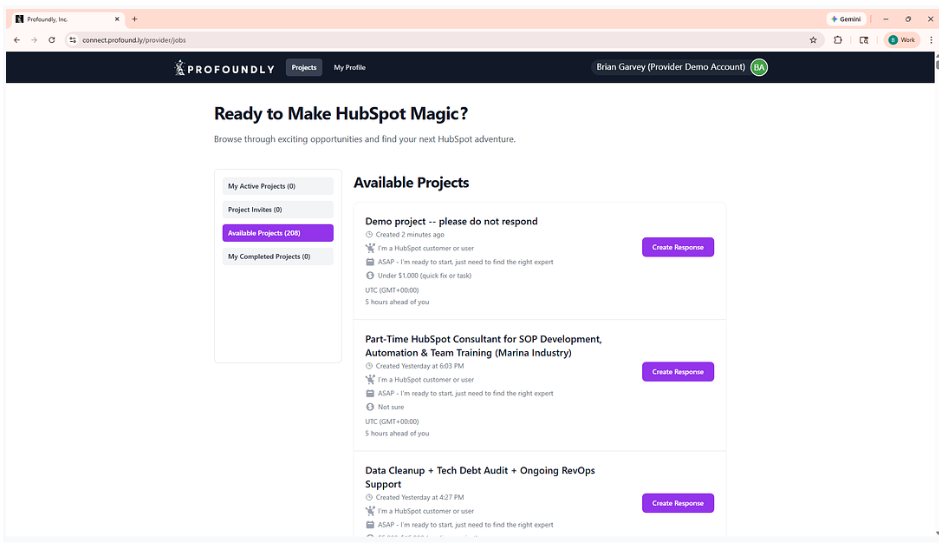
Step 1: When you log into Profoundly, the first screen you'll see is your dashboard. From here you can see your active projects that are in process, the projects submitted directly to you, available projects on the marketplace, and the projects you've completed.
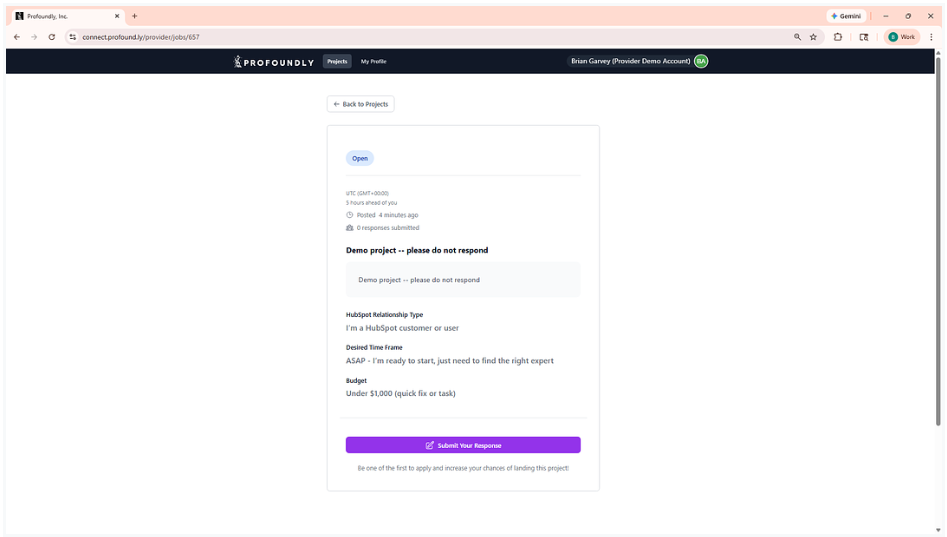
Step 2: If a project looks like a good fit for your background and expertise, click "Submit Your Response"
Setting Up Stripe
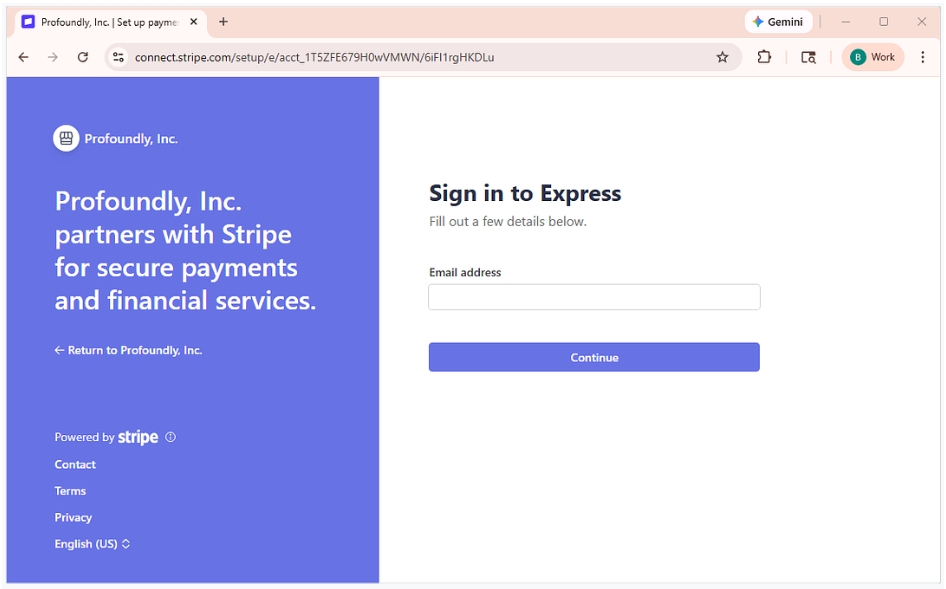
Before you can respond to a customer request, you'll be prompted to set up Stripe. This is to ensure you get paid in a timely manner. The process is Straightforward.
Step 1: Log into Stripe.
Step 2: Enter your account information where payments should be sent.
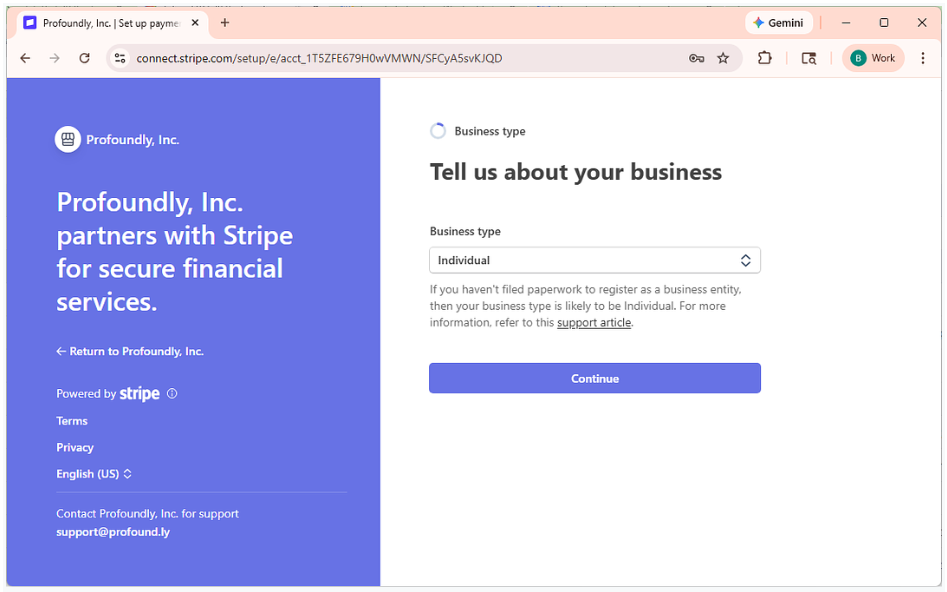
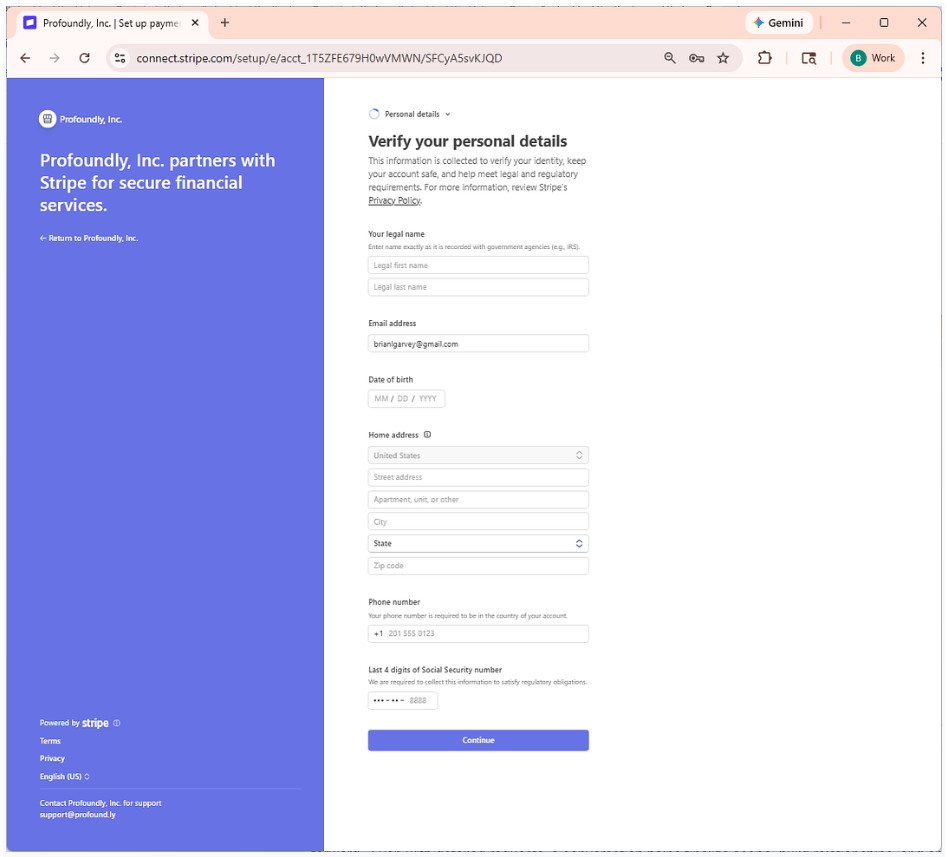
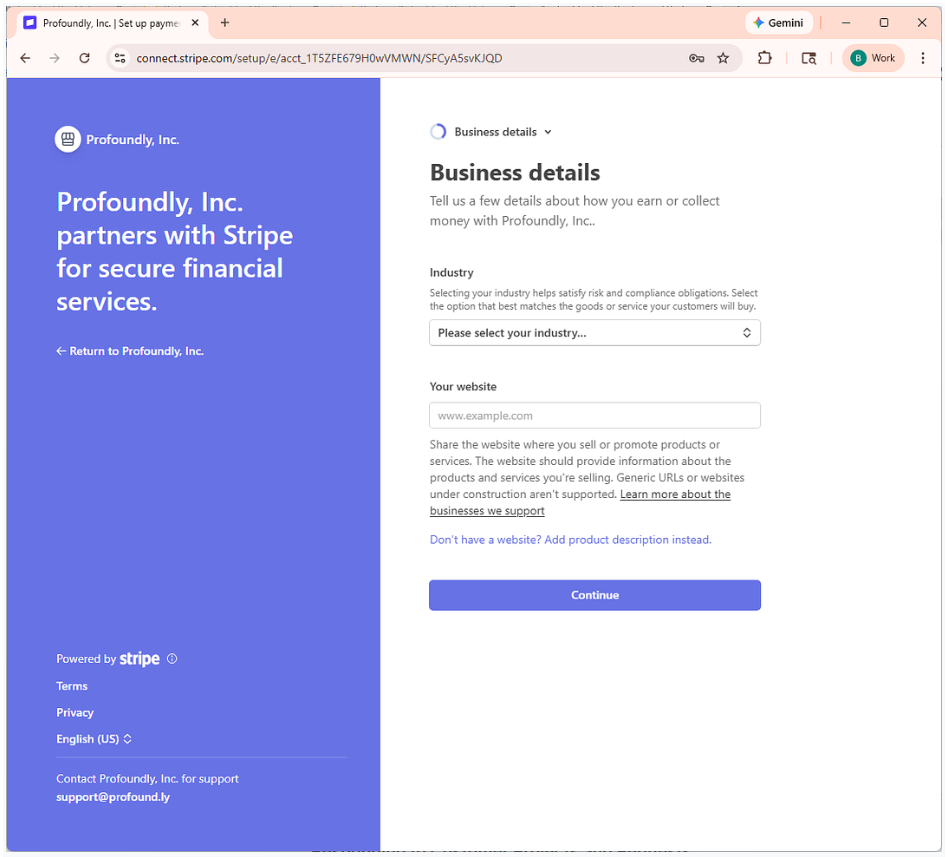
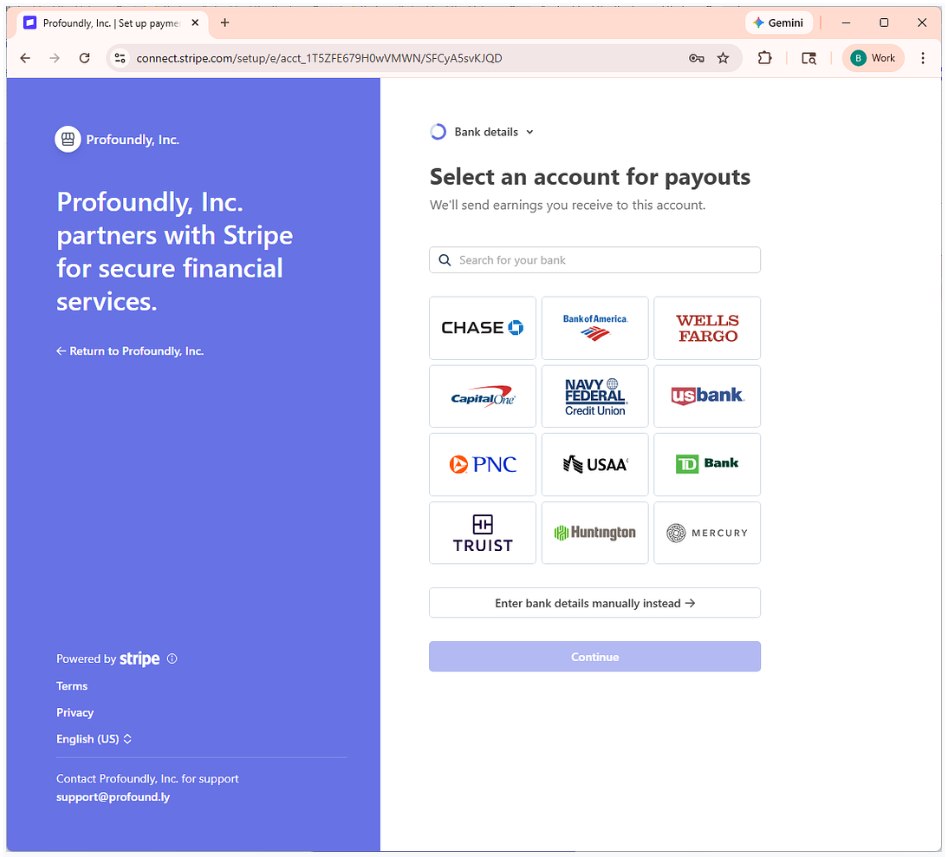
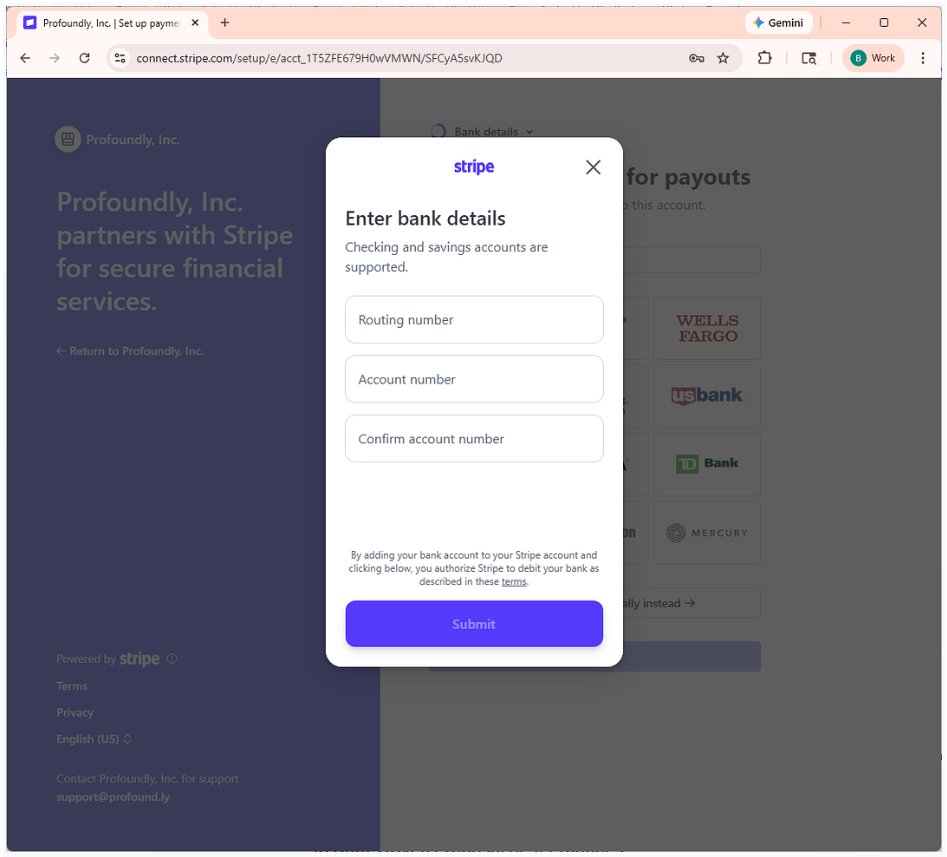
Once complete you'll be ready to respond to customer projects and requests.
Step X: Craft your response following the best practices outlined in this course.
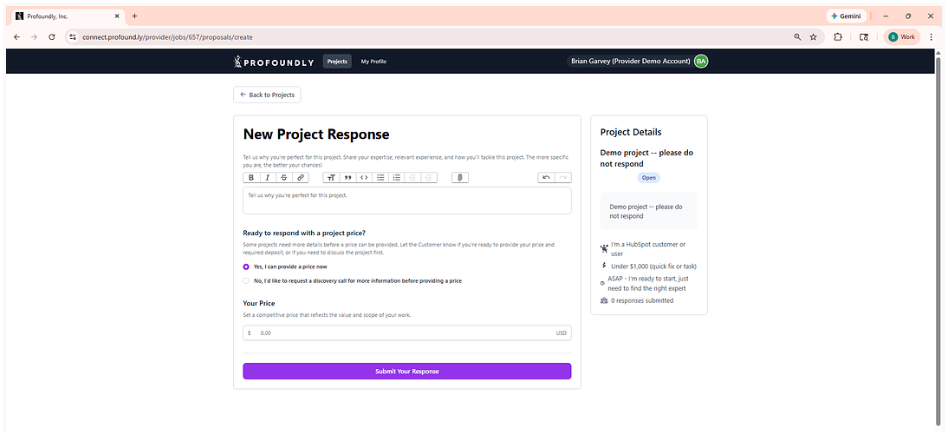
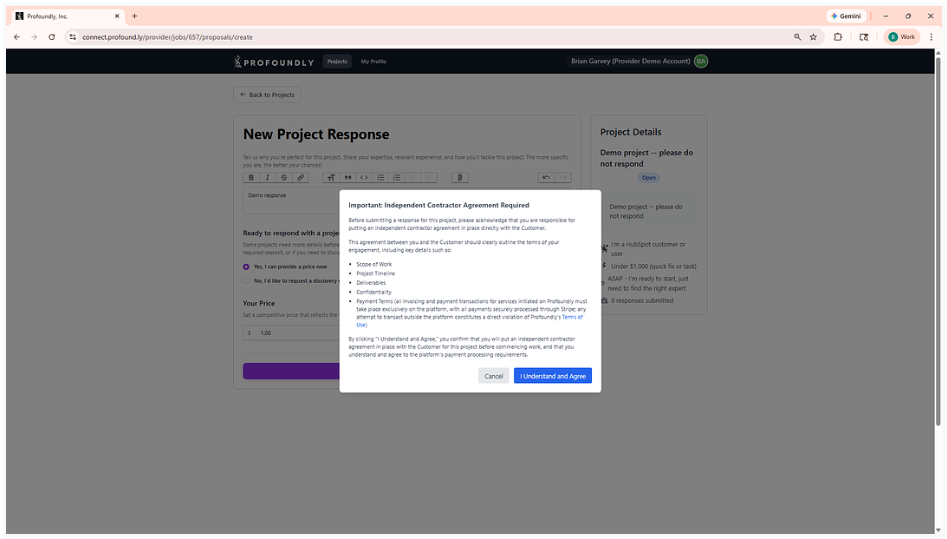
Step X: You'll be reminded to have a direct services agreement directly with the customer before work commences.
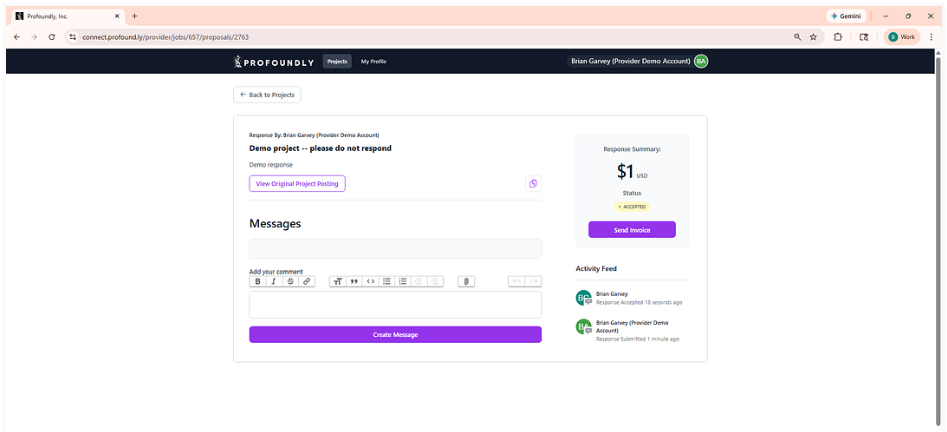
Step X: Once your response is accepted you'll be ready to begin work.
Responding to Customer Projects and Requests
The primary objective of every proposal is to get to the discovery call. While we do see customers purchasing without a discovery call, the vast majority elect to have at least one call prior to moving forward. Even with detailed requests, a conversation helps finalize scope, build relationships, and ensure everyone is aligned. Discovery calls significantly increase the likelihood of success.
10 Data-Driven Proposal Best Practices
Top-performing proposals consistently demonstrate the following:
Part I: Core Components (What Every Proposal Must Include)
1. Start Human
Begin with a friendly, professional opener.
Do this:
- Use a greeting ("Hey there, Thanks for posting this project.")
- Add one quick, positive line that shows you've read their request
Example:
"HubSpot data migrations are my primary focus and area of expertise — I've led dozens of successful migrations for organizations in the XYZ industry and would love to help make yours equally seamless."
- Briefly explain who you are
Example:
"A little bit about us, we're a five-star, Gold HubSpot Solutions Partner and have helped clients in the XYZ space get the most out of HubSpot for over a decade."
Why it matters: Customers are far more likely to engage when the opening feels personal and credible, not robotic.
2. Show You Understand the Problem
Write one or two sentences that demonstrate you understand what they're trying to accomplish — in your own words.
Example:
"Connecting the WealthEngines integration with HubSpot so your team can see giving capacity directly inside contact records is very doable."
Why it matters: Reflecting their need shows you read and understood what they wrote. It signals care, attention, and relevance — not a copy-and-paste response. That helps build immediate credibility.
3. Back Up Your Intro With Proof
Customer references, case studies, and similar examples add credibility to your proposal. They demonstrate that you've successfully helped others with similar needs.
Example:
"I've helped several nonprofit teams integrate WealthEngines into HubSpot to score and segment high-value donors. Below are testimonials from five projects very similar to yours."
The best proposals include specific proof — similar projects, outcomes, or testimonials — to reinforce credibility.
Why it matters: Specific evidence reduces perceived risk and strengthens trust.
4. Explain How, Not Just What
Outline your approach.
Example:
"I'll start by auditing your existing setup, create the WealthEngines property map, and then run a small test to confirm match accuracy before scaling."
You might structure it as:
- Phase 1: Review or setup
- Phase 2: Build or configure
- Phase 3: Test and finalize
Customers aren't just buying your expertise — they're buying your process.
Why it matters: Clarity builds confidence. Customers want to know you have a plan.
5. Ask One or Two Smart Questions
Clarifying questions show you think carefully and understand nuance.
Example:
"It would be helpful to confirm whether you've already established WealthEngines credentials. If not, I'm happy to help set that up."
Guidelines:
- Limit to 1–3 total questions. Too many feels like work.
- You'll have time to go deeper during the discovery call.
- Alternatively, list topics you'd like to cover during the call rather than asking detailed questions in the proposal.
Why it matters: Smart questions demonstrate expertise without turning the proposal into a written discovery session.
6. End with a Warm Invitation
Close with a friendly, low-pressure next step.
Examples:
- "If this sounds aligned, I'd love to jump on a quick call to confirm details."
- "Happy to find a time that works best for you."
Why it matters: Every accepted proposal clearly invites the next step.
Part II: Conversion Multipliers (How Your Proposal Should Feel)
These elements don't replace structure — they amplify it.
7. Be Clear, Confident, and Concise
Use direct, active language.
This:
- "I can help you…"
- "I'll make sure…"
Not this:
- "I might…"
- "I could…"
- "If possible…"
Why it matters: Confidence signals competence — one of the single strongest predictors of acceptance.
8. Sound Like a Partner, Not a Vendor
Use collaborative language.
Do this:
- "We can start with a small proof of concept."
- "Together, we can get your data enrichment running smoothly."
Position yourself as someone invested in their outcome — not just someone completing a task.
Why it matters: Customers want a partner who will work with them, not simply deliver against a scope.
9. Keep It Readable
Even strong proposals fail if they're hard to read.
Guidelines:
- Aim for ~250-350 words
- Break into short paragraphs or light headers
- Avoid long, dense blocks of technical text
- Keep bulleted lists focused and purposeful
Why it matters: Even smart buyers skim — readability converts.
10. Keep It Personal, Not Perfect
A little personality beats corporate polish. Write like a professional human — not a proposal template.
Example: "Excited to help you get this right."
Avoid:
- Generic template responses customers can spot immediately
- Copying your profile content into proposals
- Obvious AI patterns (over-formatting, generic phrasing, emoji-heavy responses, unnatural tone)
- Overly corporate or stiff language
Authenticity builds trust.
A Data-Optimized Proposal Example
Below is an example proposal that incorporates all of the high-performing patterns identified above.
HubSpot CRM Optimization & Sales Pipeline Setup
Hi Sarah,
I can deliver exactly what you need to streamline your HubSpot CRM and establish a robust sales pipeline. This is a core area of my expertise, and I'll ensure your team has a fully optimized system within 2 weeks.
Customer Case Studies & References (Click to Review):
- Case Study: B2B Services Firm CRM Overhaul <link> – How we reduced manual data entry by 60% and restored pipeline visibility in under 3 weeks.
- Case Study: SaaS Sales Pipeline Rebuild <link> – Re-architected deal stages and automation, resulting in 38% faster lead response times and cleaner executive reporting.
- Client Reference: Multi-State Sales Team Automation Buildout <link> – Implemented automated routing and follow-up workflows that eliminated missed assignments and improved conversion tracking accuracy by 25%.
- Case Study: Scaling Agency CRM Re-Architecture <link> – Consolidated duplicate properties and built forecasting dashboards now used weekly by leadership.
What I'll Execute:
Phase 1: Data Architecture & Workflow Setup (Week 1)
- Audit and restructure your contact/company properties for consistency
- Configure custom deal stages aligned with your sales process
- Build automated workflows for lead assignment and follow-up
- Set up pipeline reporting dashboards
Phase 2: Testing & Team Enablement (Week 2)
- Comprehensive system testing with real data scenarios
- Team training session (1 hour focused session)
- Documentation of new processes and best practices
- Go-live support and initial optimization
Why This Approach Works:
I've implemented this exact workflow architecture for 15+ B2B companies, and it consistently delivers 40% faster lead processing and 25% improvement in conversion tracking. The key is building automation that works with your team's natural behaviors rather than against them.
What You Can Expect:
- Complete CRM structure that scales with your growth
- Automated lead routing and follow-up sequences
- Real-time sales performance dashboards
- Documented processes for ongoing team use
I'd love to confirm a few details and get started. If this plan aligns with your goals, I can begin immediately and have your optimized HubSpot system live within two weeks. Happy to schedule a short call at your convenience to review next steps and ensure a smooth kickoff.
Best regards,
Amy Thompson
Senior HubSpot CRM Specialist
Remember: The best proposals don't just describe what you'll do — they make the customer feel confident choosing you.